
Coordinated Stroke Care: Stroke Ready Accreditation

Stroke is the sixth leading cause of death in Minnesota, and the leading cause of long-term disability. It’s also a condition whose outcome relies on the speed of care. We spoke with Dr. Todd Gengerke, assistant medical director, and Morgan Hill, stroke coordinator at Maple Grove Hospital, about how the hospital provides prompt care, as well as the signs of stroke and preventative measures people can take.
North – Maple Grove Hospital is a stroke-ready site. What does that mean?
Morgan Hill (MH): It means we’ve presented evidence that we’re prepared to evaluate, stabilize and provide emergency treatment to patients with stroke symptoms. It also states that we’ve created a collaboration of care between North – Maple Grove Hospital, Emergency Medical Services and the Stroke Center at North – Robbinsdale Hospital.
What are the signs of a stroke?
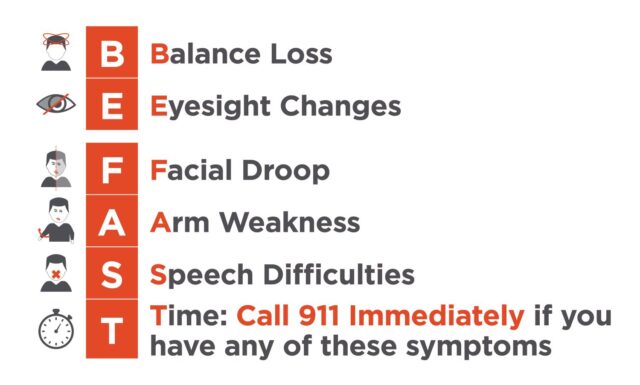
Dr. Todd Gengerke (TG): The basic signs we look for are a one-sided facial droop, arm numbness or weakness, balance issues, sudden vision changes or any speech trouble.
MH: We use the acronym BEFAST: balance, eyes, face, arms, speech and time. Time is a crucial factor. With a stroke, someone may not have pain and therefore be slower to come to the hospital. But every minute they’re losing brain cells, so the longer they wait, the more pronounced the damage. And there are certain methods of treatment that can only be done within a few hours of the onset of symptoms.
TG: Some signs, like a facial droop, often a spouse or someone else will see first. Others, like arm weakness, you’d likely notice yourself. If you or a loved one are experiencing any of these symptoms, come to Emergency Care Center as soon as you can.
How can people reduce their risk of having a stroke?
MH: The main things are lowering your blood pressure, increasing exercise, not smoking and if you drink alcohol, do so in moderation. Also treat chronic conditions such as diabetes, atrial fibrillation and high cholesterol. We recommend establishing a primary care provider to make sure you’re as healthy as you can be.
How do you care for stroke patients at North – Maple Grove Hospital?
MH: In the Emergency Care Center, we’ve implemented a stroke team that comes together whenever there’s a patient with stroke-like symptoms. That team consists of physicians, nurses, technicians, lab specialists and pharmacy and imaging staff. They all respond emergently and work together — also working closely with neurologists and Emergency Medical Services — to ensure they provide quality and rapid care.
In addition to the stroke team at North – Maple Grove Hospital, patients can also be connected to the North – Robbinsdale Hospital Stroke Center, which offers a Balance Center, an Intensive Cognitive Program and a range of support groups, helping both patients and their families recover from the effects of stroke.