
Precautions to Prevent Dehydration

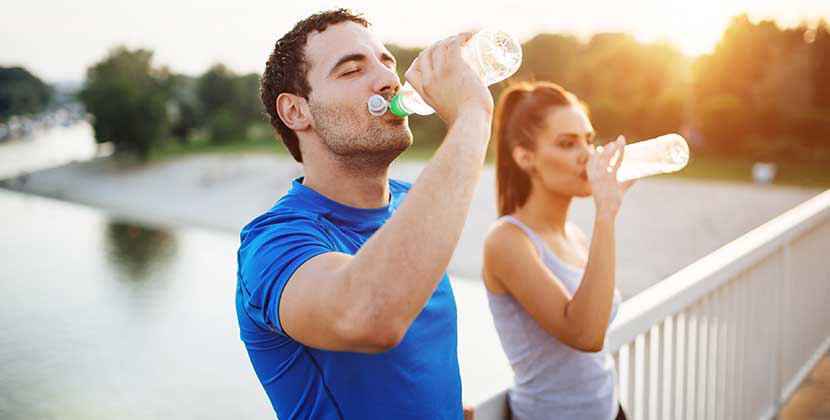
Drinking water throughout the day is the best defense against dehydration. Don’t wait until you’re thirsty to drink water.
Recommended Guidelines to Follow
According to the American College of Sports Medicine, active people should follow these guidelines to avoid dehydration:
- Before: Drink at least 16 – 20 ounces of water one to two hours before a workout or outdoor activity.
- During: Drink six to 12 ounces of water for every 10 – 15 minutes of strenuous activity.
- After: Drink at least another 16 – 24 ounces of water.
One way to make sure you are properly hydrated is to check your urine. If it’s clear, pale or straw-colored, it’s okay. If it’s darker than that, keep drinking! Eating healthy foods that naturally contain water, like melons and apples can also help keep you hydrated.
Seek medical attention immediately by going to urgent care if you experience any signs of heat-related illness, including:
- Fatigue
- Loss of appetite
- Flushed skin
- Heat intolerance
- Light-headedness
- Dark-colored urine
- Dry cough